Are you trying to decide between print on demand and dropshipping for your online business? Both options let you sell products without holding inventory, but which one is truly better for you?
Choosing the right model can save you time, reduce risks, and boost your profits. You’ll discover the key differences, pros, and cons of each method. By the end, you’ll have a clear idea of which path fits your goals and makes your business easier to grow.
Keep reading to make the smartest choice for your success.
Print On Demand Basics
Print on demand is a popular way to sell products online without holding stock. It lets you create custom items like t-shirts, mugs, and phone cases. You only print the product after a customer buys it. This reduces risk and upfront costs.
Many beginners choose print on demand because it is easy to start. You focus on designing and marketing. The printing and shipping are handled by a third party. This makes the process simple and low-stress.
How It Works
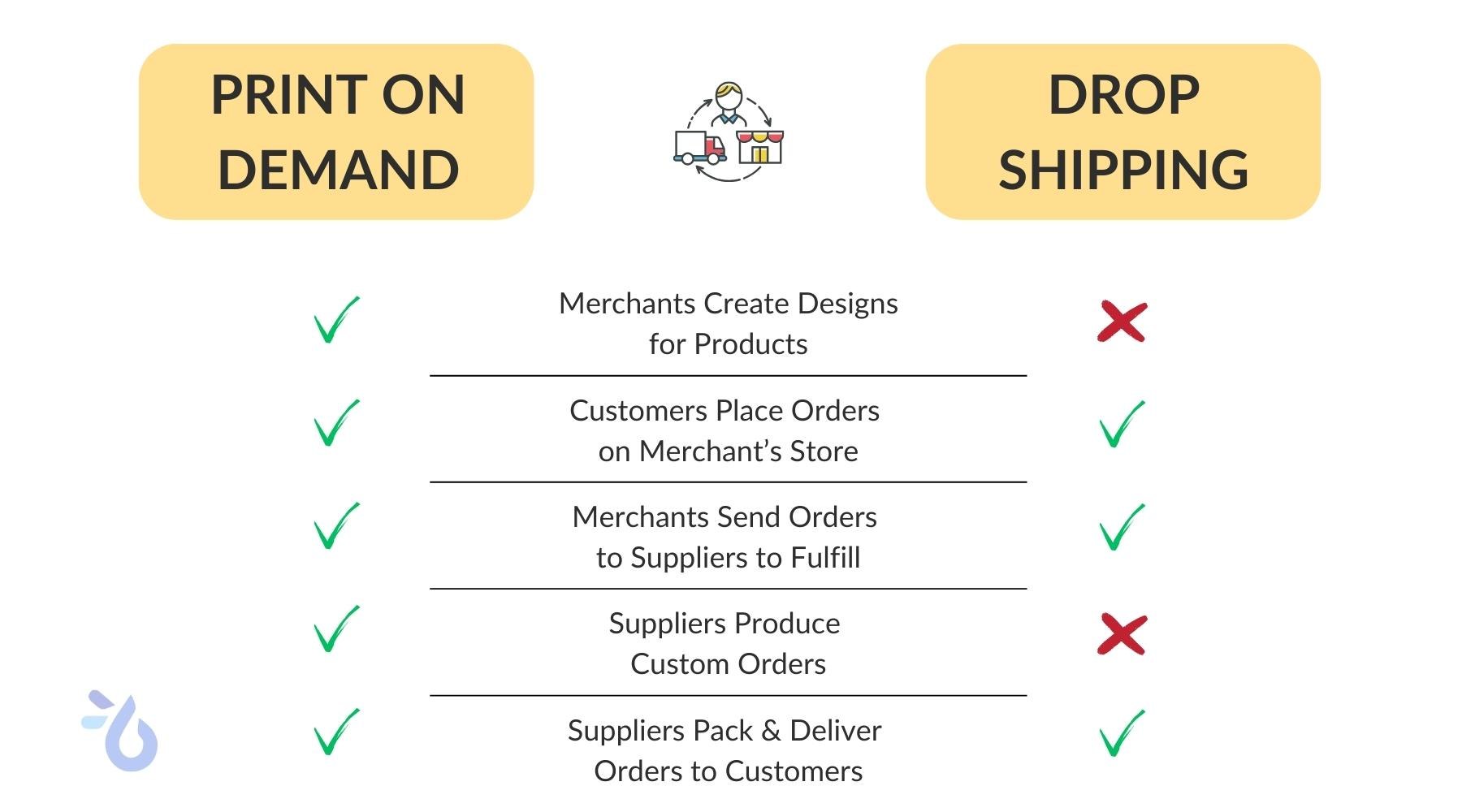
You create or upload your design to a print on demand platform. Then, you add the product to your online store. When a customer orders, the platform prints the design on the item. They pack and ship it directly to the buyer. You never touch the product. You earn profit from the sale price minus the printing cost.
Key Benefits
No need to buy or store inventory. Start with little money and low risk. Easy to test new designs and products fast. The platform handles printing and shipping. You can sell worldwide without dealing with logistics. Focus more on marketing and customer service.
Common Challenges
Profit margins can be low due to printing costs. Less control over product quality and shipping times. Dependence on the print provider’s reliability. Customization options may be limited. Harder to build a unique brand with standard products.
Credit: teeinblue.com
Dropshipping Essentials
Dropshipping is a popular online business model. It lets you sell products without holding stock. This model suits beginners and small businesses. Understanding dropshipping basics helps you decide if it fits your needs.
Operational Model
Dropshipping works by connecting a seller to a supplier. The seller lists products on a website. When a customer buys, the seller sends the order to the supplier. The supplier ships the product directly to the customer. The seller never handles the product. This saves money and space.
Advantages To Consider
Dropshipping needs low startup costs. No need to buy or store products. You can offer many items without extra risk. It allows easy testing of new products. It also works from anywhere with internet access. You can focus on marketing and customer service.
Potential Drawbacks
Profit margins are often lower than other models. You depend on suppliers for stock and shipping. Shipping times can be longer and harder to control. Quality issues may affect customer satisfaction. Managing multiple suppliers can be complex. Competition is high with many dropshippers selling similar items.
Startup Costs Comparison
Comparing startup costs is important before choosing print on demand or dropshipping. Both require money to begin but differ in how much and where you spend. Understanding these costs helps you pick the best option for your budget and business goals.
Initial Investment
Print on demand usually needs less money to start. You mainly pay for setting up your online store and designing products. No need to buy inventory upfront. This lowers the risk and cost.
Dropshipping needs more initial funds. You might pay for a website, supplier fees, and marketing. Some suppliers require a deposit or minimum orders. This can raise your starting costs.
Ongoing Expenses
Print on demand has steady costs. You pay per product sold, including printing and shipping. No need to manage stock or handle returns. This keeps expenses predictable.
Dropshipping costs vary more. You pay suppliers per order and shipping fees. Sometimes, you cover customer service or return handling. Marketing and website fees add to ongoing costs.
Product Customization
Product customization plays a key role in choosing between print on demand and dropshipping. It affects how much control you have over your products. Customization can shape your brand and attract customers. Understanding the differences helps pick the best option for your business.
Design Flexibility
Print on demand offers great design freedom. You can create unique designs for each product. This allows personal touches on t-shirts, mugs, and more. Each item can be tailored to customer preferences. Dropshipping usually sells pre-made products. Custom designs are often not possible. This limits creativity and uniqueness.
Branding Opportunities
Print on demand lets you add logos and brand details. Packaging and labels can match your brand style. This builds a strong brand image. Dropshipping suppliers may not support custom branding. Products often arrive with generic packaging. This makes it harder to stand out in the market. Branding is simpler and more effective with print on demand.
Shipping And Fulfillment
Shipping and fulfillment are key parts of any online business. They affect how fast customers get their orders. They also shape the overall shopping experience. Both print on demand and dropshipping handle these tasks differently.
Understanding their shipping speed and return process helps choose the right method. This section explains delivery times and handling returns for each model.
Delivery Times
Print on demand products often take longer to ship. Each item is made after the order is placed. This adds extra production time. Shipping can take 7 to 14 days or more.
Dropshipping usually offers faster delivery. Products are pre-made and stored in warehouses. Orders ship quickly once placed. Delivery can take 3 to 7 days depending on the supplier.
Long delivery times may lead to unhappy customers. Print on demand sellers should set clear expectations. Dropshipping sellers benefit from faster shipping but must check supplier reliability.
Handling Returns
Returns in print on demand can be complex. Custom products often cannot be resold. Sellers may offer refunds or replacements case by case.
Dropshipping returns depend on the supplier’s policy. Some suppliers handle returns directly. Others require the seller to manage them.
Clear return policies build trust with customers. Both methods need good communication and prompt response to return requests.
Credit: onprintshop.com
Profit Margins And Pricing
Profit margins and pricing are key parts of choosing print on demand or dropshipping. Both models have different costs and ways to set prices. Understanding these helps you earn more and avoid losses.
Setting Prices
Print on demand costs include product base price and printing fees. You control the design and can add a markup. This gives more freedom to set higher prices.
Dropshipping prices depend on the supplier’s cost. The product price may be lower than print on demand. But the competition can be tougher, limiting price increases.
Both need careful price setting. Prices must cover costs and attract buyers. Testing different prices helps find the best balance.
Maximizing Earnings
Print on demand allows adding unique designs. This can justify higher prices and better profits. Custom products often attract loyal customers.
Dropshipping works well with trending products. Selling popular items quickly can increase sales volume. Bigger sales can make up for lower profit per item.
Focus on reducing costs and improving product value. Good marketing and clear pricing help boost earnings in both models.
Market Demand And Trends
Market demand and trends shape the success of print on demand and dropshipping businesses. Understanding what buyers want helps sellers choose the right products. Trends can change fast. Staying updated is important to keep sales steady.
Popular Niches
Print on demand often shines in personalized items. T-shirts, mugs, and phone cases with custom designs sell well. Dropshipping does better with gadgets, home goods, and fashion. These products have wide appeal and steady demand. Seasonal products also perform well in both models.
Customer Preferences
Buyers want unique, affordable products with fast delivery. Print on demand appeals to those who like custom items. Dropshipping attracts customers who want variety and low prices. Both need clear product descriptions and good photos. Trust and convenience matter most to shoppers today.
Credit: gempages.net
Ease Of Use And Setup
Starting a Print on Demand or Dropshipping business depends a lot on how easy it is to use and set up each model. This factor affects how fast you can begin selling and earning. Both methods offer tools and platforms, but they differ in complexity and steps needed. Let’s explore these differences in detail.
Platform Integration
Print on Demand services usually connect smoothly with popular eCommerce platforms. Platforms like Shopify, Etsy, and WooCommerce have built-in apps for Print on Demand. These apps let you add products quickly without coding. The integration handles orders and sends them automatically to the print provider.
Dropshipping also supports many platforms, but setup can be more complex. You must link to supplier databases or marketplaces. Some dropshipping suppliers require manual order processing. This step can slow down the workflow compared to Print on Demand.
Learning Curve
Print on Demand has a shorter learning curve. Most tasks involve designing products and uploading images. Order management is mostly automatic. Beginners can start with little technical knowledge.
Dropshipping may need more skills. You must research suppliers, manage inventory, and handle shipping details. Understanding product sourcing and supplier reliability takes time. It demands more effort before selling smoothly.
Scalability Potential
Scalability potential shows how well a business can grow. It means handling more orders, customers, and products without big problems. Both print on demand and dropshipping offer ways to scale. Still, each has its own strengths and limits. Understanding these can help choose the right path for business growth.
Growth Opportunities
Print on demand lets you add new designs without extra inventory. You can test many ideas with little risk. This helps expand your product range easily. Dropshipping allows selling many products from different suppliers. You do not need to store items yourself. This variety can attract more buyers. Both models can use marketing to reach more customers fast. Automation tools help manage orders and support as sales grow.
Limitations To Growth
Print on demand depends on print partners for speed and quality. If they slow down, your business feels it too. It may limit how fast you can grow. Dropshipping relies on suppliers for stock and shipping. Out-of-stock items or shipping delays hurt customer trust. Managing many suppliers can become complex. Both models face competition from many sellers using the same methods. Finding unique products or designs is key to stand out and grow.
Which Model Fits Your Goals?
Choosing between print on demand and dropshipping depends on what you want to achieve. Both models have unique benefits. Your goals will shape which one suits you best.
Entrepreneur Profiles
Print on demand fits creative people. They like designing unique products. This model allows selling custom items without holding stock.
Dropshipping suits those who want variety. Sellers pick items from suppliers and sell them online. No need to create or design products.
Print on demand is good for artists and designers. Dropshipping works well for general store owners. Know your skills and interests first.
Business Priorities
Print on demand focuses on branding and product uniqueness. It needs time for creating designs and marketing.
Dropshipping prioritizes fast product testing and wide selection. It helps find popular items quickly.
Print on demand has lower risk with no inventory. Dropshipping requires managing supplier relations and shipping times.
Choose based on your patience for design and your need for variety.
Frequently Asked Questions
What Is The Main Difference Between Print On Demand And Dropshipping?
Print on demand sells custom-designed products made after orders. Dropshipping sells generic products sourced from suppliers without customization. POD focuses on creativity, while dropshipping emphasizes product variety and volume.
Which Model Offers Higher Profit Margins, Print On Demand Or Dropshipping?
Print on demand usually has higher profit margins due to unique products. Dropshipping margins are lower because of competitive pricing and supplier fees. However, dropshipping can generate profits through volume sales.
Is Print On Demand Easier For Beginners Than Dropshipping?
Yes, print on demand is generally easier for beginners. It requires less inventory management and no supplier negotiation. Dropshipping needs more supplier coordination and product research.
Can Dropshipping Scale Faster Than Print On Demand?
Dropshipping can scale faster due to a wider product range and supplier networks. POD growth depends on design creativity and niche targeting, which may take more time.
Conclusion
Choosing between print on demand and dropshipping depends on your needs. Print on demand suits those who want custom products with low risk. Dropshipping works well if you prefer a wide range of items and simple shipping. Both methods require effort and patience to succeed.
Think about your budget, time, and goals before deciding. Each option offers unique chances to build a business. Start small, learn, and grow step by step. The right choice fits your style and plans best.